Printable pieces · Porsche 993 · plastic, 1:1
Display and fit only · warning engraved in the part
Designs you can hold.
Display first. Measure next.
Most of our designs are prohibited until an engineering review that has not happened. The existing K16 and connecting-rod kits can be printed in plastic at full size for display, with MOCK-UP / NOT FOR USE engraved into their geometry. The switch-blank kit is for measurement. A new inclined fan export adds a separate static mock-up.
Print kits reviewed through · no print reported yet
New / Static mock-up
The cooling fan, inclined for a polymer slicer
A separate 1:1 STL of the F1 cooling rotor is now prepared at a 45° tilt and translated into positive slicer coordinates. It preserves the parent concept geometry and records its source hash and transformation.
The envelope is 188.56 × 244.82 × 188.56 mm. The file contains no supports: printer clearance, adhesion, support layout and slicer settings still depend on the actual machine and polymer. Filled thermoplastic is a mock-up material; no continuous-carbon-fibre process is qualified.
01 / Display
The K16 turbo wheels, on a stand
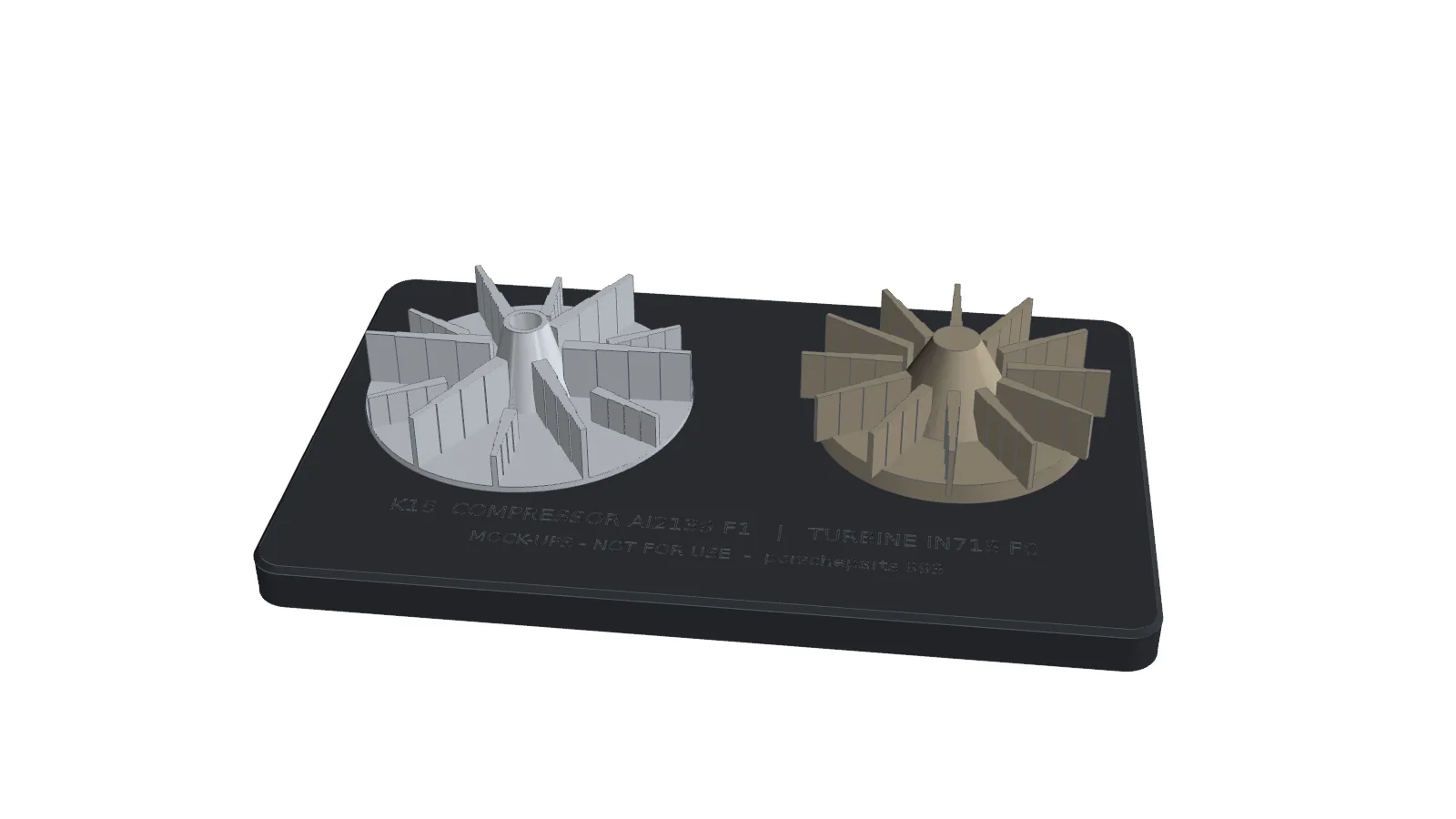
The two wheels of the 993 Turbo's K16 turbochargers, at 1:1, with a new stand: a pocket for each wheel's back, a peg in the compressor's 6 mm bore, and the nameplate. The warning is engraved on the back of each wheel and on the stand.
The designs' own operating point is a synthetic 103,464 rpm. A plastic copy would burst far below any such speed: these are shelf pieces, never turbocharger parts.
| Piece | Size | Print time |
|---|---|---|
| Compressor wheel | Ø60.5 × 18 mm | 2 h 06 |
| Turbine wheel | Ø55 × 20 mm | 1 h 45 |
| Stand with nameplate | 150 × 95 × 8 mm | 5 h 35 |
| All on one plate | ≈ 77 g PETG | 9 h 29 |
02 / Display and fit
The titanium-concept connecting rod, in plastic
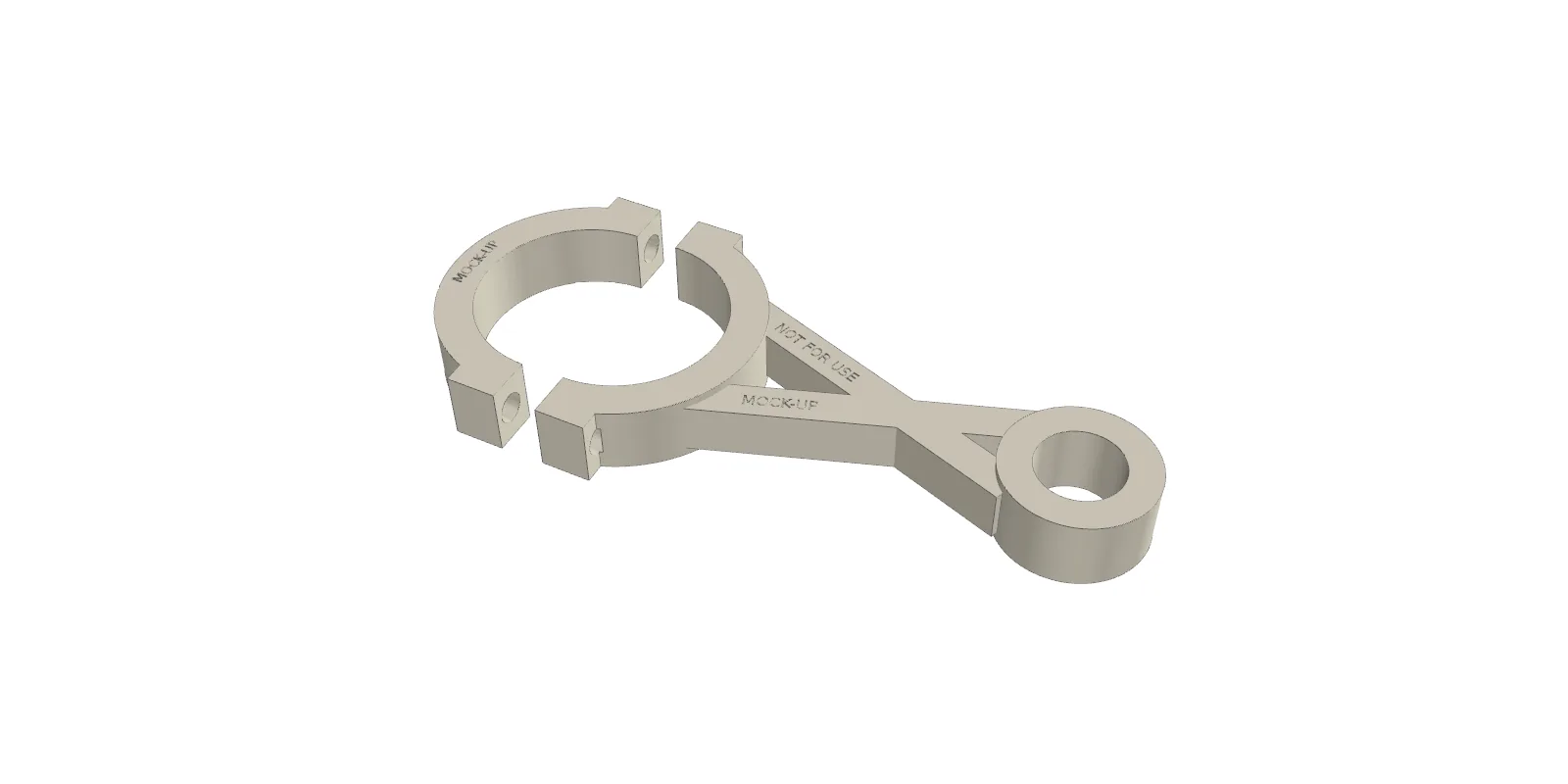
Our F0 topology rod, designed for titanium, printed at 1:1 with a split cap that bolts back on with two M8 × 45 bolts. The main dimensions are the ones published for the PAUTER 993 rod: 127.0 mm between centres, a 58.0 mm big end and a 23.0 mm small end. The truss shape is our own; no commercial shape is reproduced.
Never for an engine
A plastic rod would fail at the first turn of a crankshaft, and even the titanium design has not been reviewed. About 5 hours and 65 g of PETG: something to hold, compare and check packaging with.
03 / A real fit test
The switch blank: three sizes, one answer
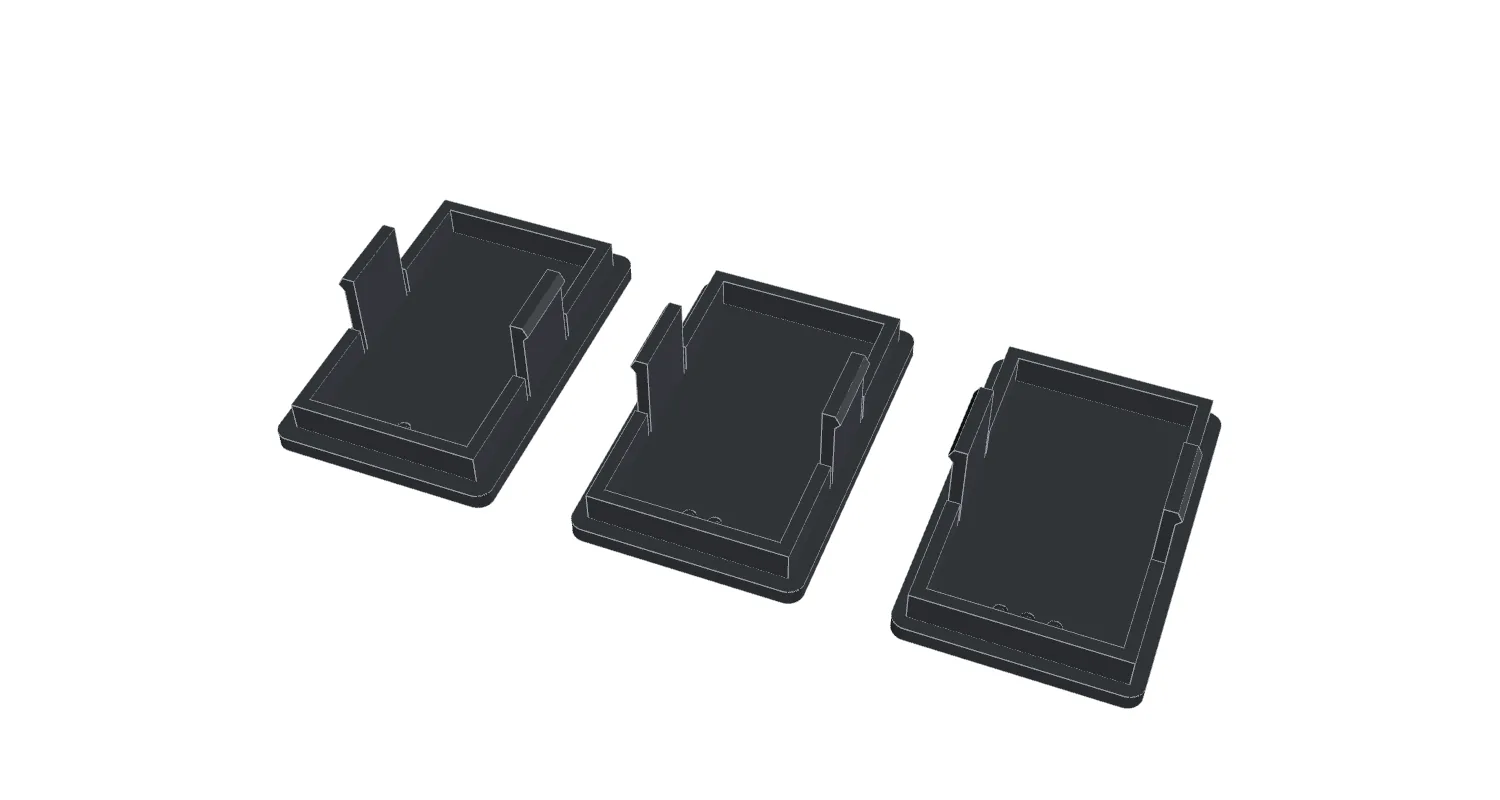
Our first printable file is deliberately a measurement, not a finished part. Nobody has measured the opening of a blank switch position in the 993 dashboard; the only published figure is about 19 × 31 mm, from a forum. So the kit brackets it, and whichever blank clicks in and sits flush tells the real size.
| Blank (dimples on the back) | Insert size | Against the declared opening |
|---|---|---|
| 1 | 18.6 × 30.6 mm | −0.4 mm |
| 2 | 19.0 × 31.0 mm | as declared |
| 3 | 19.4 × 31.4 mm | +0.4 mm |
If none fits, that is recorded too: the bracket was wrong. Either way the result becomes the first measured dimension in the record. Face size, clip length and barb are still assumptions.
04 / The evidence
Where this comes from
Renderings and print figures are copied from our private engineering repository at revision e697398. Connecting-rod dimensions are those published by TZR Motorsport for the PAUTER 993 rod.
Part records: K16 compressor wheel · K16 turbine wheel · connecting rod · switch blank · all projects