Exhaust · 993-EXH-OVAL-TIP-TI-F1-0001
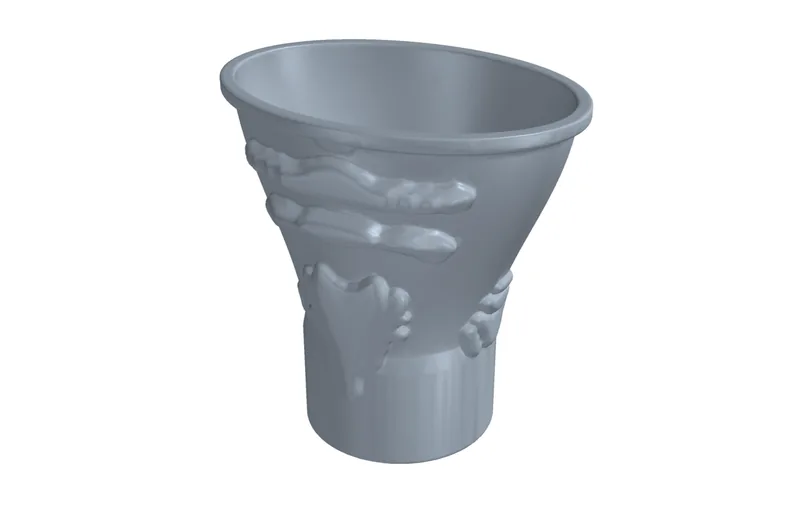
Oval exhaust tip, titanium F1 variant
ConceptFunctional part
Same double-wall geometry as the IN625 F0 variant, screened in titanium. Selected by the repository titanium screening as the only part in the catalogue where both titanium and additive manufacturing win without running into the safety class. The alloy is deliberately not fixed in the identifier: Ti-6Al-4V and Ti-6242 are both screened, and a temperature that has never been measured separates them.
The design
- Vehicle
- Porsche 993, 1994–1998
- Variants
- 993 C2, 993 C4, 993 RS narrow body
- Porsche part numbers
- Not recorded
- Category
- Exhaust tip
- Geometry basis
- Mixed
- Preferred process
- Laser powder-bed fusion (metal printing)
- Other candidate processes
- Direct metal laser sintering (metal printing), sheet_metal
- Material
- Ti-6Al-4V if the actual temperature allows it; Ti-6242 otherwise, but with no supplier identified
- Material standard
- ASTM F2924 for PBF-LB Ti-6Al-4V; AMS 4975/4976 for wrought Ti-6242
Known limits
- The 427 °C temperature that decides the alloy is a synthetic input of the F0 screening, never measured on a vehicle.
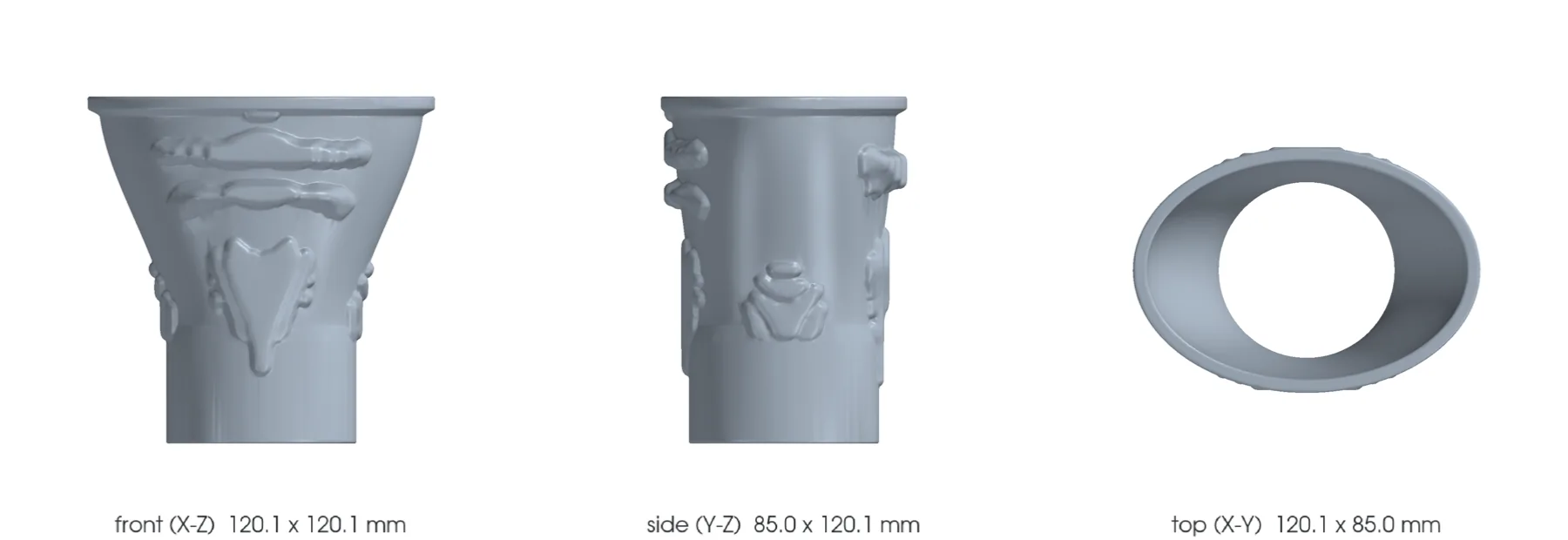
- Only the 120 x 85 mm outlet envelope is published; length, inlet interface and slip-fit depth are assumptions.
- Depowdering of the 2.7 mm annular channel is checked only by the 1 mm voxel screening, a resolution too coarse to conclude.
- No reviewed orientation, no supplier supports, no machine file.
- No strength, thermal cycling, acoustic or vehicle fitting test.
Post-processing it would need
- Trimming, support removal and rework of the attachments
- Stress relief heat treatment, 800 °C 2 h under argon on the EOS Ti64 route
- Controlled depowdering of the 2.7 mm annular channel, borescope inspection required
- External surface finish to be defined, the tip is visible
What a supplier would have to provide
- Material certificate, powder lot and number of reuses
- Proposed orientation and support topology, with justification
- Evidence of depowdering of the annular channel, by borescope or tomography
- Documented heat treatment and delivery condition
- Layer thickness used and coupon properties at that thickness
Titanium route
- Alloy
- Ti-6Al-4V primary candidate, Ti-6242 high-temperature fallback
- Heat treatment
- 800 °C 2 h under argon for the EOS Ti64 route; not fixed for Ti-6242
- Hot isostatic pressing
- To be determined
- Dimensional inspection of the outlet envelope
- Borescope inspection of the annular channel
Sources
- FVD - 993 narrow-body oval stainless tips · read
FVD declares 120 mm at the widest, 85 mm at the tallest, stainless construction and C2/C4/RS applications. No inlet diameter, length, angle, thickness or datum.
- PorscheFanatics - register of declared materials · read
Documents 993 Turbo exhaust offerings declared in IN625; material precedent only, with no geometry and no fitment transfer.
- EOS NickelAlloy IN625 material data sheet · read
M 290 40 µm screening values, dependent on orientation and post-processing.
- Special Metals - INCONEL alloy 625 · read
Reference wrought thermal properties, never an LPBF allowables card.