Body · 993-BODY-FRONT-LID-0001
Front lid, composite panel
ConceptFunctional part
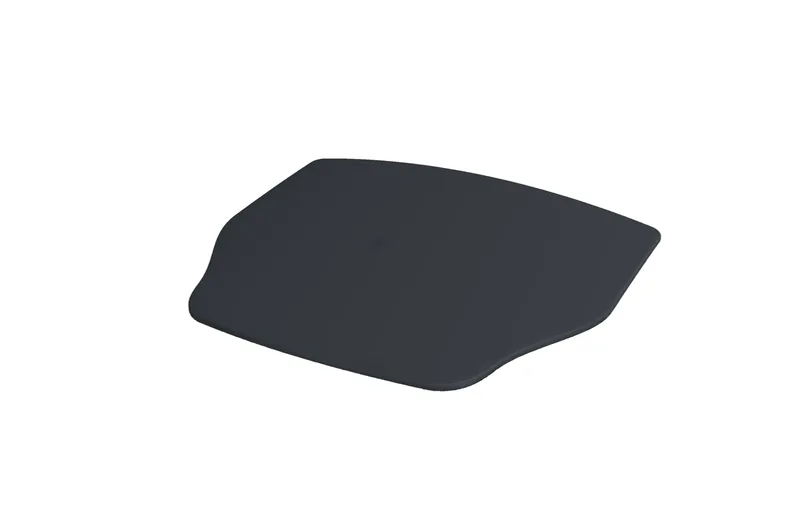
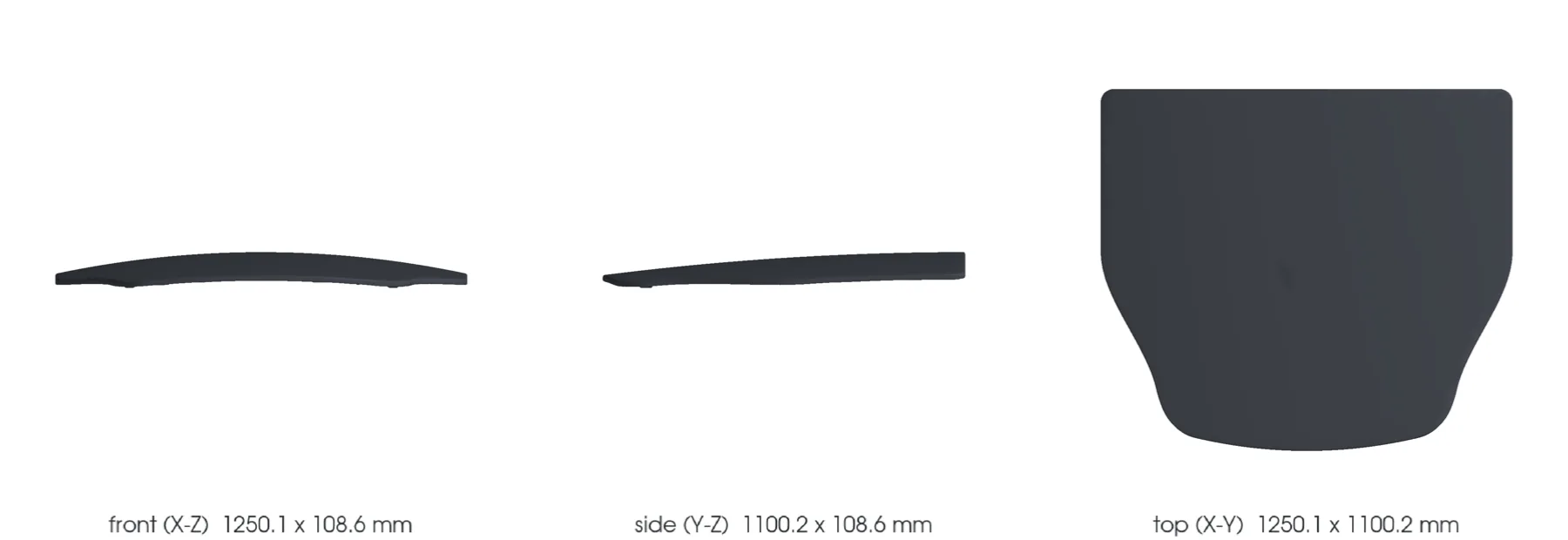
993 front lid reproduced in composite from the original steel panel. Bolted skin part, with no structural function and no anti-intrusion bar, retained as the first lightweight body pilot.
The design
- Vehicle
- Porsche 993, 1994–1998
- Variants
- to confirm on vehicle
- Porsche part numbers
- 993 511 010 01, 993 511 010 31
- Category
- Body panel
- Geometry basis
- Estimated
- Preferred process
- Not chosen yet
- Other candidate processes
- casting
- Material
- fiber and resin to be determined; glass, carbon or hybrid
- Material standard
- none
Known limits
- Class functional and not non_critical: the panel carries nothing, but a lid that comes loose at high speed is a safety event. The hinge and latch interfaces are therefore the critical dimensions, not the skin.
- Original mass claimed at 14.0 kg by a German tuner, consistent with the 8 kg Porsche Motorsport aluminum lid. Claimed carbon epoxy target: 4.1 kg, a gain of about 9.9 kg. These masses are claimed, not weighed by this project: weighing the donor panel remains step zero.
- Porsche part number transcribed from catalogue Kat 017: 993 511 010 01, and 993 511 010 31 for the Carrera RS. Variant and model year of the donor vehicle remain to be confirmed.
- The mold must be taken from a sound, undeformed original panel: a crash-damaged lid would give a wrong part.
- Fiber, resin, layup and core not defined. A poorly designed glass laminate can be heavier than the original steel.
- Fire behavior, under-hood temperature resistance and UV aging not evaluated.
- Regulatory compliance not studied: a change of body material may require an inspection depending on the country of registration.
Post-processing it would need
- Trimming
- Fitting of the hinge and latch interfaces
- Gap and flush check
Sources
- Paul Stephens Autoart - 993R, body weight reduction · read
Confirms that the original lid is steel and that a Porsche Motorsport aluminum version weighs 8 kg.
- Specialist press - Gunther Werks, carbon-bodied 993 · read
Precedent of a 993 body made entirely of carbon prepreg, with the steel body shell kept and reinforced.